
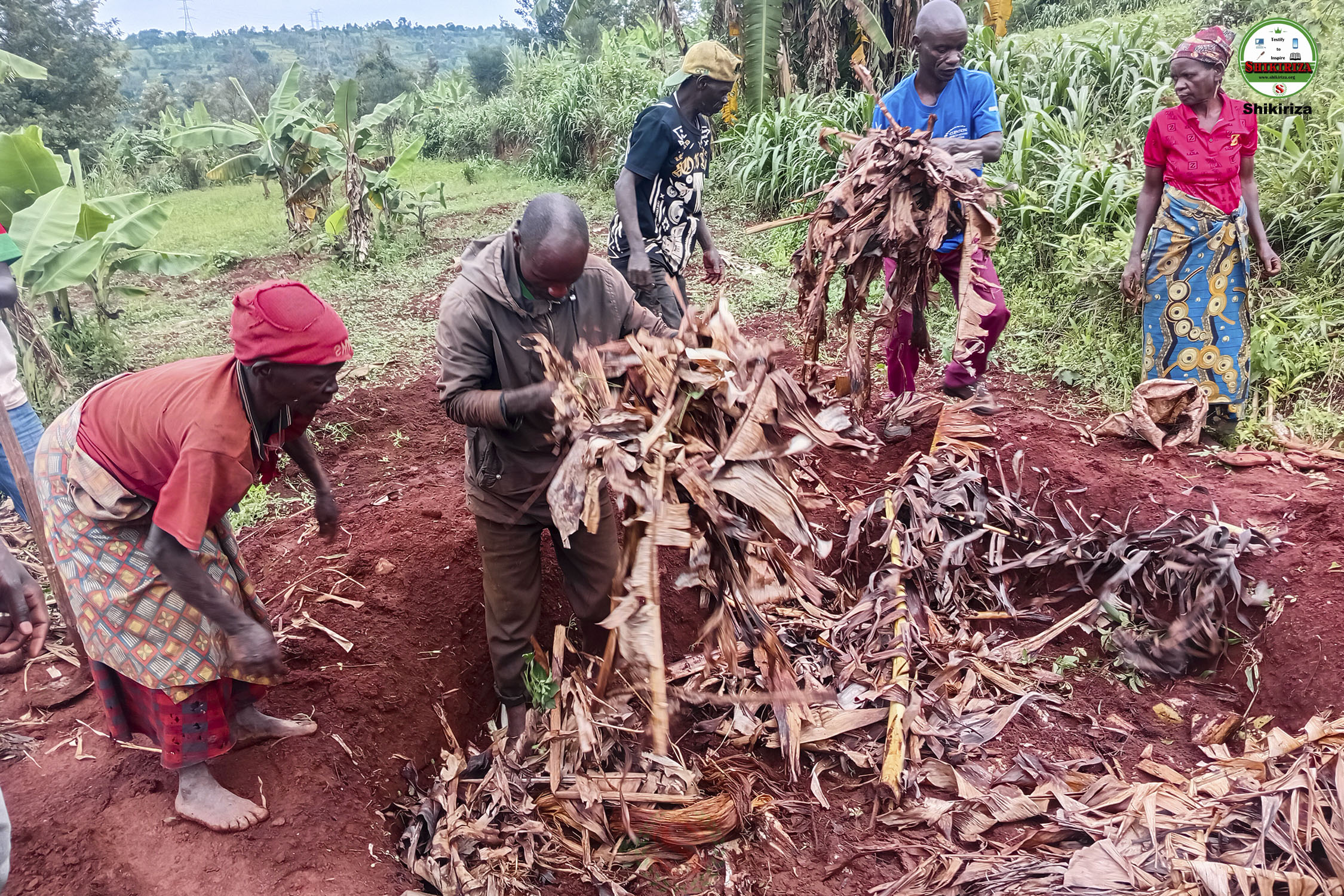
In Burundi, where more than 80% of the population relies on agriculture, Slow Food Burundi is helping indigenous Batwa communities adopt sustainable practices. Through training in natural fertilizer production and the distribution of small livestock, the initiative aims to improve nutrition, reduce household tensions over food, and strengthen ecological farming, even during the dry season.
Burundi, like many other countries in Africa and Asia, practiced non-modernized agriculture until the 19th century. Before colonization, Burundians often relied largely on favorable weather conditions for their harvests. Over time, traditional farming methods continued until colonial authorities introduced chemical fertilizers between the 1920s and 1950s. Today, with more than 80% of the population depending on agriculture for their livelihood, the country is striving to promote more sustainable farming practices.
It is in this context that the company FOMI began producing non-chemical fertilizers locally. However, their use remains limited due to foreign currency shortages and high demand, according to Manyange Hermegilde during a press conference held at the end of 2025.
Slow Food Burundi, the national branch of the global Slow Food movement—which promotes healthy, sustainable, and culturally meaningful food systems—is reviving the use of natural fertilizers made from plant waste. On January 7, 2026, the organization held a training session for the Batwa community, the only Indigenous people’s community in Burundi, teaching them how to produce organic fertilizers through composting. To support the initiative, 14 goats were distributed to 14 households to facilitate access to organic manure. Local authorities and the Twa community of Ruhata village, in Karusi Commune, Gitega Province, welcomed the project, which demonstrates the community’s willingness to adopt ecological and traditional agricultural practices.
Agroecology: A Pathway to Greater Stability During the Dry Season
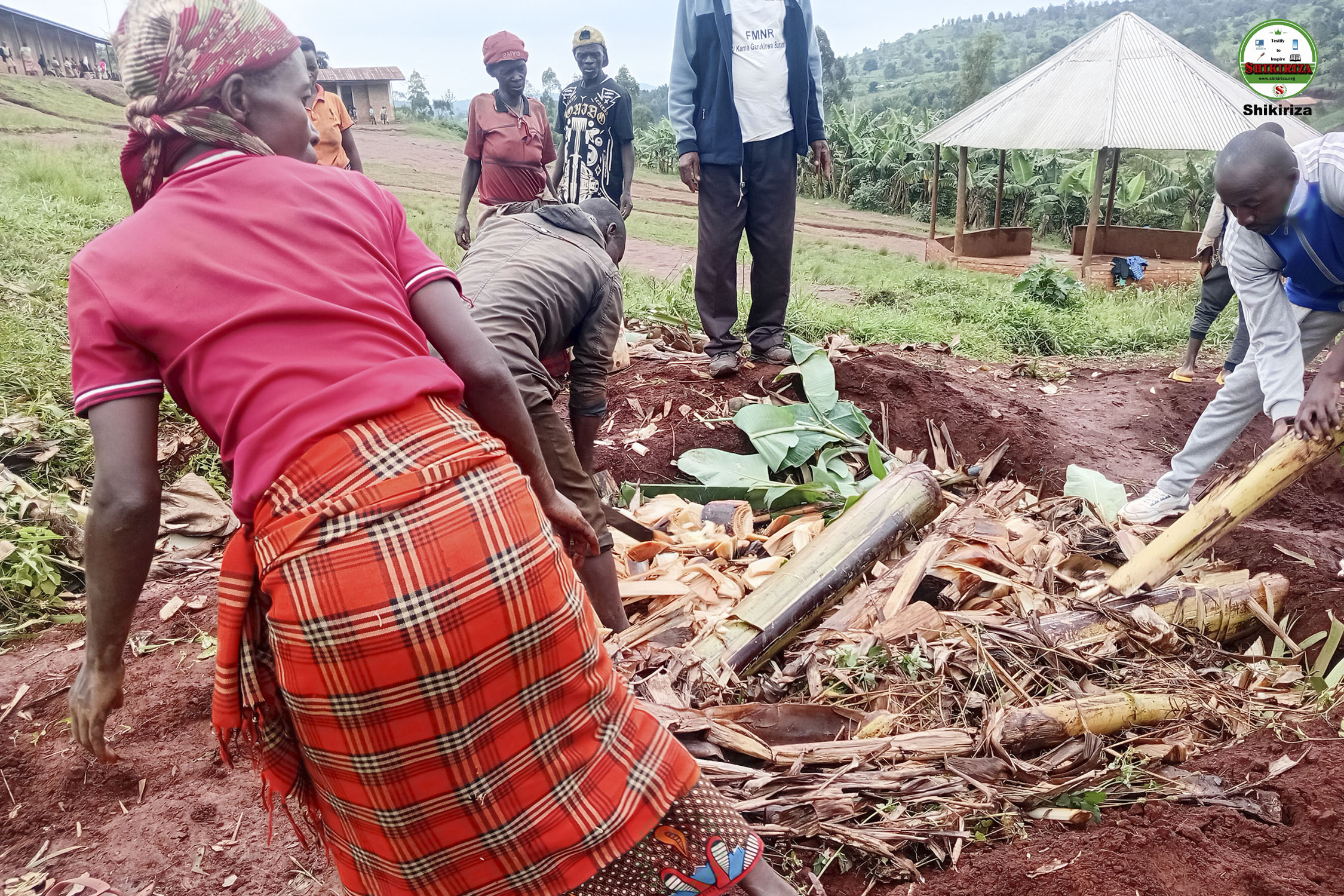 “This training comes at the right time,” said Privat Ngomirakiza, a representative of the Batwa community
The indigenous community of Ruhata village welcomed Slow Food’s commitment to helping them produce organic manure independently. According to Privat Ngomirakiza, a representative of the Batwa community, these initiatives will help improve living conditions and reduce tensions related to access to food.
“This training comes at the right time. Previously, there was jealousy linked to food. When a neighbor came home with something to eat and refused to share it, it created resentment,” he emphasized.
He added that organic manure production remains applicable even during the dry season. He urged the Batwa community to maximize production, especially since they have received support in the form of small livestock—particularly goats—which will contribute to promoting sustainable agriculture within indigenous communities.
For his part, Audace Cintije, Coordinator of Slow Food Burundi, called on authorities to support indigenous communities to ensure their full participation in sustainable development projects. He also noted that vegetable gardening among participants improves nutrition—particularly vegetable consumption—and reduces household expenses.
Agronomist Cédric Kwizera expressed his willingness to continue supporting the Batwa community.
“We are not bad examples, even though some accuse us of selling what we receive. There are even Hutu and Tutsi communities that fail in this regard,” Privat Ngomirakiza responded during discussions about managing the goats received.
He assured that beneficiaries would take good care of the animals. If any problem arises, he said he would prefer to use his own resources rather than sell the assistance received. He affirmed that he strives to set a good example and asked Slow Food Burundi to trust them and continue supporting the Batwa as well as other vulnerable families.
Natural Fertilizers: A Promising Solution When Industrial Options Are Unavailable
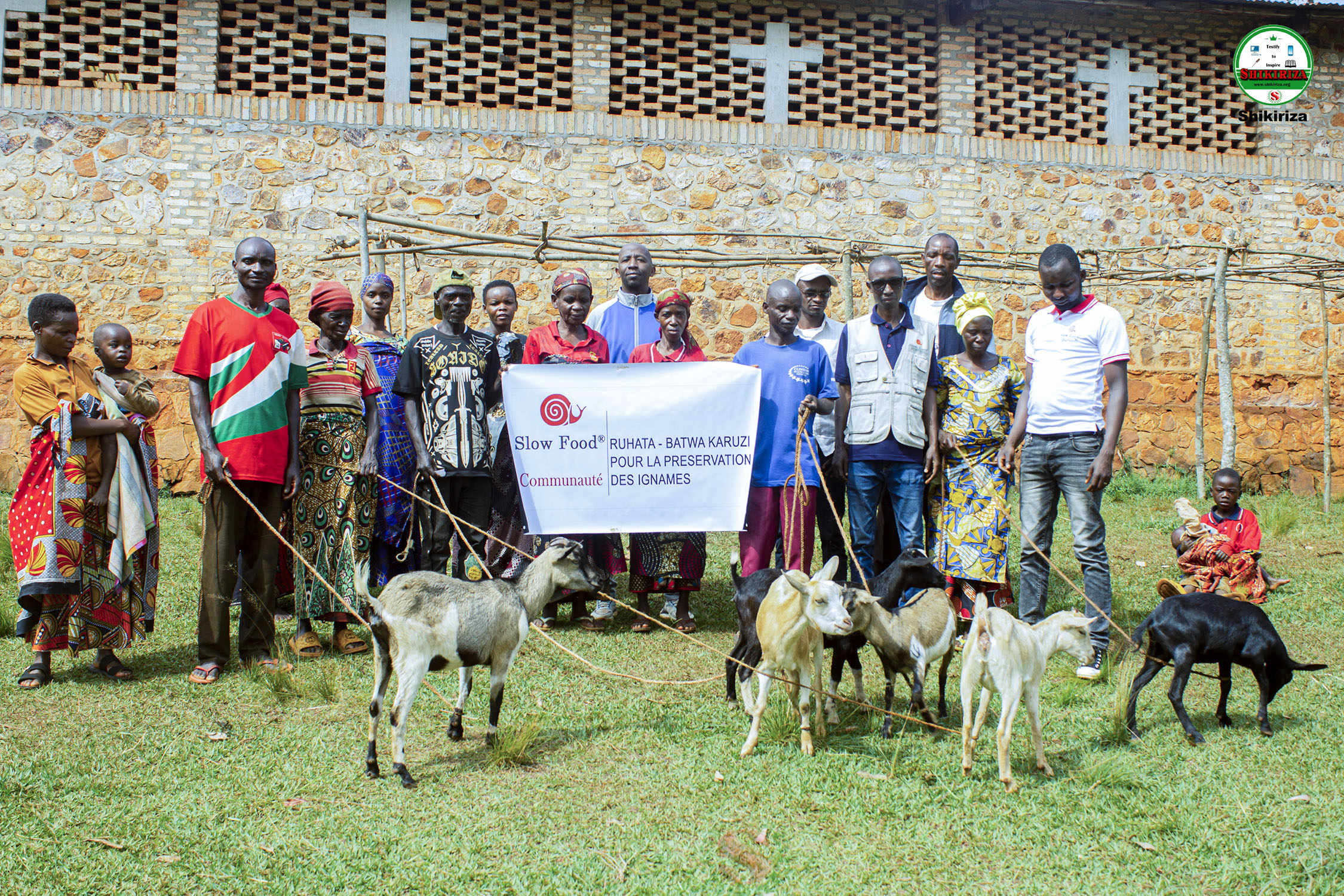
14 beneficiary households received the domestic goats from Slow Food Burundi
Agronomist Cédric Kwizera explained that natural fertilizer is produced from a mixture of green plants, dry grasses, and ash, with a decomposition period of five to six months.
Also present at the training, Philbert Simbabaje, the zone chief of Nyaruhinda, promised to strengthen and promote the initiative for the benefit of the local population.
“We do not encourage the misuse of chemical fertilizers, and since they are often unavailable, we encourage communities to produce and use natural fertilizers,” Kwizera explained during a practical session on fertilizer preparation. The session, held on January 8, 2026, involved digging pits and filling them with a mixture of green and dry plant materials.
He added that there is no need to wait for chemical fertilizers when communities can produce their own. If production increases, surplus fertilizer could even be sold. He encouraged participants to master the practice so they can later become trainers themselves.
“When a plant is well fertilized, the harvest is good,” stated Audace Cintije, urging the Batwa community of Ruhata to adopt proper agricultural practices.
Due to limited arable land, he also encouraged them to learn additional trades alongside pottery. This would allow them to make better use of their small plots and contribute to the national development vision.
By reviving traditional and eco-friendly agricultural methods, Slow Food Burundi demonstrates that local communities can achieve greater self-reliance and improve their livelihoods. Training in organic fertilizer production, combined with practical support such as goat distribution and vegetable gardening, empowers the Batwa to strengthen food security, protect the environment, and contribute to Burundi’s broader development goals.
At the conclusion of the training, in a motivating atmosphere, the 14 beneficiary households expressed their gratitude for the goats distributed by Slow Food Burundi. According to Audace Cintije, goats were chosen because of their feeding habits.
“Goats graze on grass, while other domestic animals may consume food that is also intended for human consumption,” he explained.